
A Deeper Look at the InBody Scan

Why Body Compositon Matters More Than the Scale
When people begin a weight loss journey, whether through lifestyle changes, medication, or exercise, one of the biggest frustrations is watching the scale become the primary marker of progress. But a number on a scale does not tell the whole story. That is where body composition analysis with the InBody is helpful. The InBody scan offers a clearer picture of what your body is made of, not just how much you weigh.
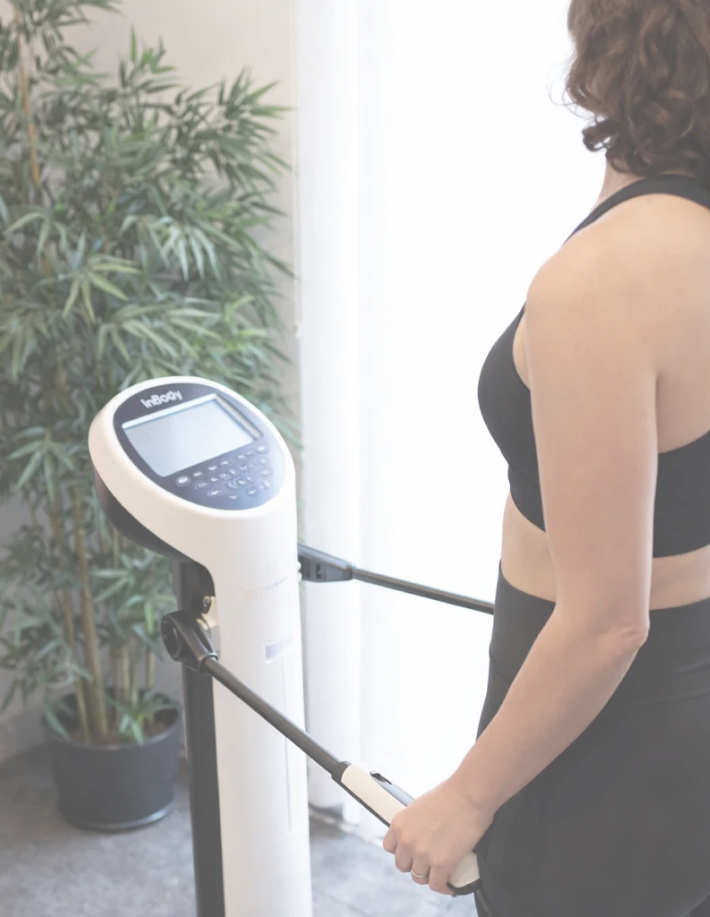
An InBody scan is a type of body composition analysis that uses bioelectrical impedance analysis (BIA) to estimate the amounts of fat, muscle, and water in your body. When you stand on the machine and hold the hand electrodes, it sends small, painless electrical currents through your body.1
The InBody provides you a printed report on
Body fat percentage
Skeletal muscle mass
Visceral fat levels
Basal metabolic rate estimate (calories burned at rest)
How accurate is the InBody scan?
Studies comparing InBody to Dual Energy X-Ray Absorptiometry (DXA) which is often considered a clinical gold standard for body composition, show strong correlations (e.g., up to 98% correlation for fat-free mass and percent body fat).2
While it is not perfect, it’s a tool to measure progress over time that is easily accessible.
Why body composition matters before a weight loss drug or a weight loss journey
When starting a weight loss journey with or without medications like GLP-1 agonists (e.g., semaglutide, ozempic) or other weight-loss drugs, it’s common to fixate on overall weight loss.
But, weight loss is not all fat loss. Weight loss can come from fat loss, muscle loss and water shifts.
A scan before starting your journey can provide you with more meaningful baselines
Establish a baseline fat vs lean mass
Water retention
Muscle distribution
Help tailor nutritional and exercise plans to preserve muscle
Give insight into visceral fat, which is more closely linked with cardiometabolic risk than total body weight2
Tracking Progress: Beyond the Scale
One of the biggest psychological benefits of body composition tracking stems from motivation.1
You may gain weight because you increased muscle even as fat decreases
With body composition data, you can see this progress
There are limitations, the InBody can be influenced by hydration status, time since eating, recent exercise and fluid shifts. It is best to be consistent in the time of day you measure progress. Tracking trends over time, once a quarter can give a clear picture of real progress.
For those serious about long term health and sustainable transformation, knowledge truly is power and body composition gives you that knowledge in numbers that matter.
References
Blue, M., Hirsch, K., Brewer, G., et al. (2022). The Validation of Contemporary Body Composition Methods in Various Races and Ethnicities. British Journal of Nutrition.
Antonio J, Kenyon M, Ellerbroek A, Carson C, Burgess V, Tyler-Palmer D, Mike J, Roberts J, Angeli G, Peacock C. Comparison of Dual-Energy X-ray Absorptiometry (DXA) Versus a Multi-Frequency Bioelectrical Impedance (InBody 770) Device for Body Composition Assessment after a 4-Week Hypoenergetic Diet. J Funct Morphol Kinesiol. 2019 Apr 25;4(2):23. doi: 10.3390/jfmk4020023. PMID: 33467338; PMCID: PMC7739224.


Comments